


Admin
Administrators
-
Joined
-
Last visited
-
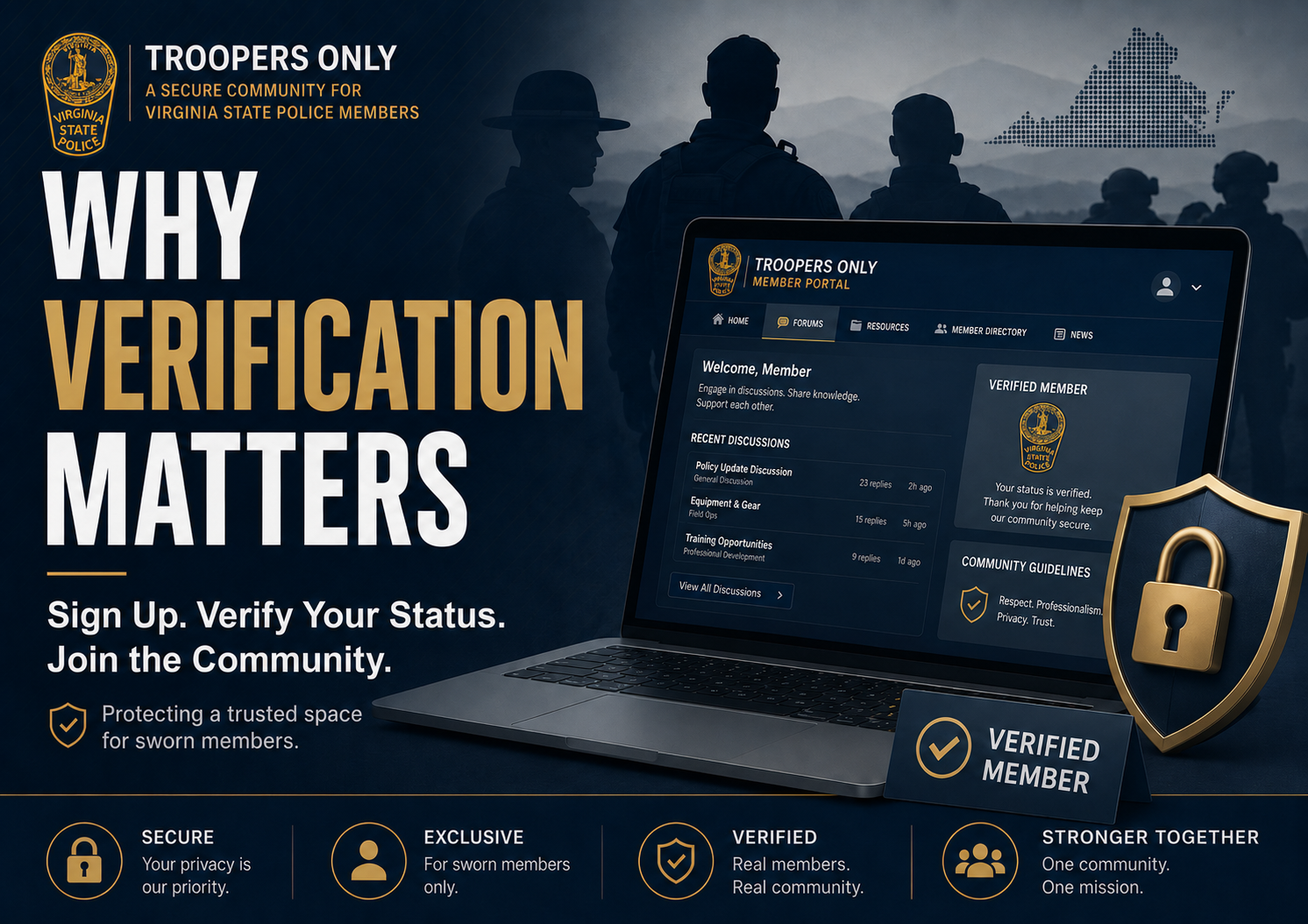 Troopers Only was created to provide a private and professional online community for sworn members of the Virginia State Police. In order to protect that purpose, all registered members who wish to access the full community must complete the sworn member verification process. Verification is an important step because it helps ensure that access to member-only areas is limited to those who are eligible. This protects the integrity of the community, encourages open and respectful discussion, and helps members feel confident that they are communicating with other verified personnel. Where to Verify Your AccountRegistered members can complete the verification process by visiting: https://troopersonly.com/swornverif/ You may also see verification options available through the site’s verification block or account-related pages. Once your verification has been submitted, it will be reviewed before full access is granted. Why Verification Is RequiredTroopers Only is intended for sworn members of the Virginia State Police. Because of that, verification is necessary before members can access private discussion areas, member resources, and other restricted portions of the site. This process helps us: Confirm that members are eligible for access Protect private community discussions Maintain trust among verified members Prevent unauthorized access to sworn-member areas Keep the site professional, respectful, and secure Guests and unverified users may still be permitted to view limited portions of the site, but full participation in the community requires successful verification. Protecting Personal InformationVerification is handled carefully and is used only for confirming eligibility. Information submitted during the application or verification process is not shared publicly with other members. The purpose of collecting this information is to confirm that the account belongs to an eligible sworn member and to assign the appropriate access permissions. Members should also be careful when submitting information. Only use the official Troopers Only verification page and make sure the information provided is accurate. Submitting incomplete or inaccurate information may delay the review process. Building a Trusted CommunityA strong private community depends on trust. Verification helps ensure that members can participate with confidence, knowing that the people inside the community have gone through the same eligibility review process. By completing verification, members help protect the privacy, security, and purpose of Troopers Only. This step is not just about gaining access. It is about helping build a safer, stronger, and more reliable community for sworn personnel. Complete Your VerificationIf you have registered for Troopers Only but have not yet completed verification, please visit: https://troopersonly.com/swornverif/ Once your verification is reviewed and approved, your account will be updated with the appropriate access, allowing you to participate more fully in the Troopers Only community.
 -
Troopers Only was created to provide a private and professional online community for sworn members of the Virginia State Police. In order to protect that purpose, all registered members who wish to access the full community must complete the sworn member verification process. Verification is an important step because it helps ensure that access to member-only areas is limited to those who are eligible. This protects the integrity of the community, encourages open and respectful discussion, and helps members feel confident that they are communicating with other verified personnel. Where to Verify Your AccountRegistered members can complete the verification process by visiting: https://troopersonly.com/swornverif/ You may also see verification options available through the site’s verification block or account-related pages. Once your verification has been submitted, it will be reviewed before full access is granted. Why Verification Is RequiredTroopers Only is intended for sworn members of the Virginia State Police. Because of that, verification is necessary before members can access private discussion areas, member resources, and other restricted portions of the site. This process helps us: Confirm that members are eligible for access Protect private community discussions Maintain trust among verified members Prevent unauthorized access to sworn-member areas Keep the site professional, respectful, and secure Guests and unverified users may still be permitted to view limited portions of the site, but full participation in the community requires successful verification. Protecting Personal InformationVerification is handled carefully and is used only for confirming eligibility. Information submitted during the application or verification process is not shared publicly with other members. The purpose of collecting this information is to confirm that the account belongs to an eligible sworn member and to assign the appropriate access permissions. Members should also be careful when submitting information. Only use the official Troopers Only verification page and make sure the information provided is accurate. Submitting incomplete or inaccurate information may delay the review process. Building a Trusted CommunityA strong private community depends on trust. Verification helps ensure that members can participate with confidence, knowing that the people inside the community have gone through the same eligibility review process. By completing verification, members help protect the privacy, security, and purpose of Troopers Only. This step is not just about gaining access. It is about helping build a safer, stronger, and more reliable community for sworn personnel. Complete Your VerificationIf you have registered for Troopers Only but have not yet completed verification, please visit: https://troopersonly.com/swornverif/ Once your verification is reviewed and approved, your account will be updated with the appropriate access, allowing you to participate more fully in the Troopers Only community. View full article
-